• Skip to main content
  • Skip to primary sidebar
  • Skip to footer

Live SV logo

  • Home
  • About
  • Life & Success
  • Travel
  • Business
  • Finance
  • Blog
  • Business
  • Health
  • Technology
  • Contact Me

Health

How Family Dentistry Promotes Positive Reinforcement For Children

June 10, 2026

You might be feeling torn every time you think about taking your child to the dentist in Morrisville, NC. You know dental visits matter, yet you worry about tears in the waiting room, a tight little jaw that will not open, or that look of fear in your child’s eyes when they hear the word “dentist.” It can feel like a simple checkup turns into an emotional marathon for both of you.end

Over time, those stressful visits can shape how your child feels about dental care as an adult. That is the part that keeps many parents up at night. You are not just trying to get through today’s appointment. You are trying to avoid a lifetime of dental anxiety for your child.

There is a gentler path. A family dentist who focuses on positive reinforcement in children’s dental care works with your child’s emotions, not against them. Instead of forcing cooperation, they build trust, celebrate small wins, and help your child feel brave and proud. Because of this, dental care starts to feel normal and safe, not scary.

So where does that leave you? It means you are not stuck with “white-knuckle” appointments forever. With the right approach in family dentistry, you can help your child build confidence in the chair, learn healthy habits, and carry that calm into adulthood.

Why Do Dental Visits Feel So Hard For Kids And Parents?

Think about what a dental visit looks like from your child’s point of view. Bright lights. Strange tools. New people wearing masks. A chair that leans back. For a young child, especially a first-timer, that can feel overwhelming.

Now layer in your own stress. You may be worried your child will refuse to open their mouth, that you will be judged for a cavity, or that the appointment will run long and disrupt your day. When your child senses your tension, their anxiety grows too. It becomes a quiet loop. You feel nervous about their reaction, they pick up on it, and everyone leaves exhausted.

This is why behavior guidance is such a central part of pediatric and family dentistry. The American Academy of Pediatric Dentistry outlines a range of behavior strategies, including positive reinforcement, in its behavior guidance recommendations for pediatric dental patients. The goal is not just to “get through” a procedure. The goal is to support your child’s emotional development while protecting their oral health.

So what happens when those emotional needs are not addressed? Children may start to associate the dentist with fear. They might cry, resist, or shut down during appointments. Parents may begin delaying visits to avoid the struggle. Small problems can grow into bigger ones, and by the time treatment is finally done, everyone is drained.

This is where a family dentist who truly understands positive reinforcement can change the story.

How Does Positive Reinforcement In Family Dentistry Actually Work?

Positive reinforcement is more than a sticker at the end of a visit. It is a whole way of interacting with your child that rewards cooperation, bravery, and effort at every step.

Here is what that can look like in practical terms.

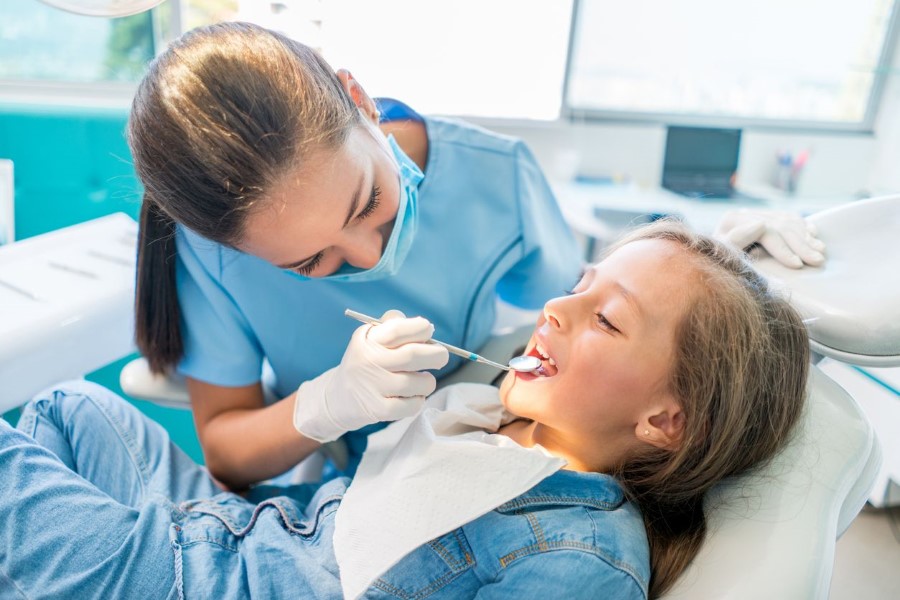
Imagine your child is anxious about their cleaning. A family dentist focused on encouraging dental experiences for kids might start by explaining each tool in simple language and letting your child touch the mirror or the suction. Then they might say, “When you open really big like a lion, I can count all your teeth. That helps me keep them strong.” Every time your child opens wide, the dentist praises that behavior. “You did that so well. You are helping me so much.”

Nothing is forced. Instead, your child learns that their brave choices lead to positive attention, praise, and sometimes small rewards. Over time, these experiences reshape how they feel about dental care. The focus shifts from “I am scared” to “I can do this.”

Positive reinforcement often works hand in hand with other behavior guidance tools. Those might include “tell show do” explanations, modeling with a sibling, or using calm, clear language. The American Academy of Pediatric Dentistry’s behavior guidance guideline describes how these methods can be combined thoughtfully and safely.

Because of this, your child is not just learning to sit through a visit. They are learning self-regulation, trust, and a sense of mastery. That is powerful, especially for children who are shy, sensitive, or have had a difficult medical experience before.

What About More Complex Needs Or Very Anxious Children?

Some children, especially those with special health care needs or significant anxiety, may need more support. In these cases, a family dentist might discuss advanced options like sedation or care in a hospital setting. That can sound frightening at first, yet for some families it is what allows necessary treatment to happen in the safest and least traumatic way.

There are clear professional guidelines about who can provide these services and how. The AAPD’s information on advanced behavior guidance and sedation privileges helps ensure that if your child ever needs this level of care, it is done by trained, credentialed providers.

Even then, positive reinforcement does not go away. It simply adjusts to your child’s situation. The dentist still explains what will happen, still praises your child’s efforts, and still looks for every chance to build trust and calm.

Comparing Approaches: Why Positive Reinforcement Matters In Children’s Dental Care

You might wonder how different approaches really play out over time. The contrast between a fear-based visit and a positive reinforcement visit can be significant, both in the moment and in the long run.

Approach What It Looks Like During The Visit Short-Term Effect On The Child Long-Term Impact On Dental Attitude
Fear or Pressure Based “You have to sit still or this will hurt.” Little explanation. Focus on getting the procedure done quickly. Child may freeze, cry, or resist. Visit might be completed, but everyone leaves tense. Higher risk of dental anxiety. Child may avoid future visits, leading to more problems later.
Positive Reinforcement Centered “When you open wide, I can count your teeth and keep them strong.” Clear explanations. Praise for each cooperative step. Child feels seen and supported. May still be nervous, but feels proud and more willing to try. More trust in the dentist. Better chance of regular checkups and healthier habits into adulthood.
Mixed or Inconsistent Some praise, but also threats or rushed moments when time is tight. Child receives mixed signals. Cooperation varies from visit to visit. Unpredictable feelings about dental care. Some appointments go well, others are stressful.

Reading this, you may recognize parts of your own experience, either as a parent or from your own childhood. That awareness is not something to feel guilty about. It is a starting point. From here, you can choose a family dentist who leans into positive reinforcement and steady, respectful communication.

Three Practical Steps You Can Take Right Now

1. Ask specific questions when choosing a family dentist

Instead of just asking, “Are you good with kids,” go deeper. You might ask:

“How do you use positive reinforcement with nervous children?”

“What do you do if my child refuses to open their mouth?”

“How do you involve parents during the visit?”

The way the team answers will tell you a lot. Look for calm, clear explanations and an emphasis on praise, guidance, and patience rather than control or pressure.

2. Prepare your child with simple, honest language

You do not need to rehearse a script. A few calm, truthful sentences are enough. For example, “We are going to see the dentist. Their job is to help keep your teeth strong and clean. They will count your teeth and maybe tickle them with a special brush. If you feel nervous, you can squeeze my hand.”

Avoid saying things like “It won’t hurt at all” or “Be good or it will be bad.” Those phrases can increase fear. Instead, focus on effort and courage. After the visit, praise specific behaviors. “You opened your mouth even when you were nervous. That was very brave.”

3. Notice and praise small wins, not just perfect behavior

Your child does not have to sail through a visit to earn praise. If they sat in the chair a little longer than last time, tried a new tool, or stopped crying more quickly, that progress matters. When you notice and name those steps, you reinforce the idea that growth is possible and effort is valued.

You are teaching your child that it is okay to be scared and still try. That lesson reaches far beyond the dental office.

Choosing A Kinder Dental Path For Your Child

You are not overreacting if dental visits feel heavy. You are protecting your child, and you are thinking about their future. That instinct is something to trust. With a family dentist who understands supportive children’s dental visits, you can move from dread to a quiet kind of confidence.

Positive reinforcement does not erase every tear or worry, yet it changes the direction of the story. Each visit becomes an opportunity for your child to feel a little braver, a little more in control, and a lot more supported. Over time, those small moments add up to a lifetime of better oral health and less fear.

You deserve a partner in that process. Reach out to a family dentist who prioritizes gentle communication, behavior guidance, and steady positive reinforcement, and start rewriting how your child experiences dental care, one visit at a time.
 

Filed Under: Health

6 Preventive Services General Dentists Provide At Routine Checkups

June 8, 2026

You might be looking at your calendar, seeing that Westwood dentist appointment coming up, and wondering if it is really worth the time and cost. Maybe your teeth do not hurt, you brush most days, and life is already busy. Or maybe you are feeling a bit guilty because it has been a while since your last visit, and you are bracing for a lecture or a big bill.end

If that sounds familiar, you are not alone. Many people see routine checkups as “just a cleaning” and something that can be pushed off. The truth is that a general dentist does much more than polish your teeth. A regular visit is a quiet safety net that catches problems early, protects your health, and often saves you money and discomfort later.

In simple terms, here is the short version. During a routine checkup, your dentist is usually providing 6 key preventive services. Careful exams, professional cleanings, gum health checks, cavity prevention, oral cancer screening, and tailored advice for home care. These are small steps that add up to major protection for you and your family.

So where does that leave you today. If you have been unsure about the value of seeing a general dentist on a regular schedule, understanding these 6 services can make that decision feel a lot clearer and less stressful.

Why do routine visits matter if nothing hurts right now?

It is natural to think, “If I am not in pain, I am probably fine.” Pain, however, usually shows up late. Tooth decay, gum disease, and even oral cancer can develop quietly for months or years before you feel anything. By the time there is pain, treatment is often more involved, more expensive, and more urgent.

That is the frustrating part. Dental problems often grow in the background. A small cavity that could have been treated with a quick filling during a routine visit might turn into a root canal or extraction if it goes unnoticed. Mild gum inflammation can turn into bone loss and loose teeth. For children, untreated cavities can affect sleep, school performance, and even growth.

This is why organizations like the U.S. Preventive Services Task Force emphasize the value of early screening and preventive care in children. For example, they recommend dental screening and preventive measures for children and adolescents to reduce cavities and improve long term oral health. You can see their guidance on oral health screening and preventive interventions for kids and teens. The same basic idea applies to adults. Catch it early, treat it simply.

So what exactly happens in that chair that makes such a difference.

What are the 6 key preventive services a general dentist provides?

A routine visit to a general dentist for preventive care usually includes some or all of these 6 services, depending on your age, risk, and medical history.

1. Thorough dental exam

Your dentist looks over each tooth, your gums, your bite, and the soft tissues in your mouth. They are checking for early decay, cracks, worn fillings, signs of grinding, infections, and changes in your tongue, cheeks, and palate.

Imagine a tiny crack in a tooth. You may not see or feel it, but your dentist can spot it and monitor it, or treat it before it becomes a broken tooth on a weekend trip. This exam is the foundation of preventive dental services during routine checkups.

2. Professional cleaning and plaque removal

Your hygienist removes plaque and tartar that brushing and flossing cannot fully handle. Even with good home care, minerals in saliva harden plaque into tartar, especially behind lower front teeth and around molars. Once it hardens, only professional tools can remove it.

Without that cleaning, tartar sits on the teeth and under the gums, feeding bacteria that cause cavities and gum disease. A cleaning is not just cosmetic. It is an important health step.

3. Gum disease screening

Healthy gums do not bleed when you brush or floss. During a checkup, your dentist or hygienist gently measures the pockets between your teeth and gums. They look for swelling, bleeding, and bone loss on X rays when needed.

Early gum disease is usually painless, but it can lead to tooth loss if ignored. There is also growing evidence that gum health is linked to conditions like diabetes and heart disease. Catching gum disease early means simpler treatment and better outcomes for your overall health.

4. Cavity prevention for children and adults

Preventing cavities is not just about filling them once they appear. Your dentist may use fluoride treatments, dental sealants for children, and personalized advice on diet and brushing to lower your risk.

The U.S. Preventive Services Task Force has specific recommendations on screening and interventions to prevent cavities in young children. These include fluoride varnish and early counseling for parents. Similar tools are used for older children and adults, adjusted to your risk level.

5. Oral cancer screening

During a routine visit, your dentist silently checks for any unusual spots, sores, or lumps in your mouth, lips, and throat. Many people never realize this is happening, yet this simple screening can be life saving because oral cancers are far easier to treat when found early.

This is especially important if you smoke, drink alcohol regularly, or have a history of HPV. Even if you have none of these risks, early detection matters.

6. Personalized home care and lifestyle guidance

Every mouth is different. Some people have crowded teeth that trap food. Others have dry mouth from medications. Children may struggle with brushing or love sugary snacks. During your visit, your dental team can show you better brushing and flossing techniques, recommend the right toothpaste or mouthwash, and talk through simple changes in diet or habits.

This might include tips for cleaning around braces, choosing snacks that are easier on teeth, or handling teeth grinding at night. These small changes, guided by a general dentist, often make the biggest difference between constant dental work and simple maintenance.

How do preventive visits compare to “wait until it hurts” care?

You might still be wondering how much preventive visits really change the picture. It can help to see the contrast between staying ahead of problems and waiting until something goes wrong.

APPROACH WHAT IT USUALLY INVOLVES SHORT TERM IMPACT LONG TERM IMPACT
Regular preventive checkups Cleanings, exams, screenings, early treatment of small issues Lower costs per visit, less time in the chair, fewer surprises Fewer major procedures, better gum health, lower risk of tooth loss
“Wait until it hurts” care Emergency visits, extractions, root canals, urgent treatments Higher stress, more pain, larger unexpected bills More missing or heavily treated teeth, higher overall costs, more time off work or school

Real life often sits somewhere between these two columns. The point is not perfection. It is shifting closer to the side where you are in control, problems are caught early, and your mouth stays healthier with less drama.

What can you do right now to protect your oral health?

You do not need to overhaul your entire life to benefit from routine general dental services. A few thoughtful steps can move you in the right direction.

1. Schedule your next checkup and commit to a simple rhythm

If it has been more than 6 to 12 months since your last visit, choose a general dentist you trust and book an appointment. Then, before you leave that visit, schedule the next one. Treat it like you would a medical checkup or important work meeting. This removes the mental load of “I should call them sometime” and turns preventive care into a routine habit.

2. Ask clear questions during your visit

You are not expected to know all the dental terms. When your dentist points out something, ask what it means, what your options are, and what happens if you do nothing for now. Questions like “Is this urgent or can it wait a bit” or “What is the simplest way to prevent this from getting worse” can help you make calm, informed decisions.

3. Focus on one realistic change at home

Instead of trying to be perfect, choose one improvement. It might be brushing twice a day, adding flossing at night, using a fluoride toothpaste, or cutting back on sugary drinks between meals. If you have children, make toothbrushing a shared routine, not a battle. Small, steady steps are easier to keep and build real protection over time.

Moving forward with more confidence and less worry

Feeling uncertain or even a little ashamed about your teeth is more common than you might think. You might be worried about what the dentist will say, or about what they will find. The truth is that every mouth tells a story, and the role of a general dentist is not to judge that story, but to help you write the next chapter with fewer problems and more comfort.

By understanding the 6 preventive services general dentists provide at routine checkups, you can walk into your next visit knowing what is happening and why it matters. You are choosing early, simple care over late, stressful emergencies. That choice is a quiet, powerful way to take care of yourself and your family.


Filed Under: Health

How General Dentistry Bridges Preventive And Cosmetic Dentistry Together

June 8, 2026

You might be feeling a little caught in the middle right now. On one hand, you want a healthy mouth and to avoid painful or expensive dental work. On the other hand, you also want to feel confident when you smile, and you are not sure how to balance both without getting overwhelmed or spending a fortune. A professional North Scottsdale dental office can help you achieve both health and confidence in a way that fits your life.

Maybe it started with a small chip on a front tooth, or a coffee stain that no whitening toothpaste seems to touch. Then at your last checkup, the hygienist mentioned early signs of gum issues or a cavity starting. Now you are wondering if you should focus on “fixing the look” or “fixing the health” first, and you are worried that choosing one means ignoring the other.

The good news is that you do not have to choose. A strong relationship with a general dentist often connects preventive care and cosmetic results in one steady plan, so your mouth feels better and your smile looks better at the same time. In simple terms, general dentistry sits at the center, making sure that what keeps your teeth healthy can also support how they look.

So where does that leave you right now. It means you can step back, understand how preventive and cosmetic dentistry fit together, and then move forward with a calmer mind and a clearer plan.

Why your mouth health and your smile confidence are more connected than you think

There is a quiet tension many people feel. You might be embarrassed about the look of your teeth, yet you are also worried about deeper problems that you cannot see. Maybe you avoid photos, cover your mouth when you laugh, or delay cleanings because you are afraid of bad news. This can be emotionally draining, and it can also allow small problems to grow into big ones.

Preventive dentistry focuses on stopping problems before they start. That includes regular cleanings, exams, X rays, fluoride, and helping you build strong daily habits. If you want a simple overview of why prevention matters, the CDC offers a clear look at why oral health is so important to overall health.

Cosmetic dentistry focuses on how your teeth look. Whitening, bonding, veneers, tooth colored fillings, and aligning teeth are usually thought of as “appearance work.” Yet most cosmetic treatments rest directly on the foundation of healthy teeth and gums. If that foundation is weak, cosmetic work will not last, and you may end up paying twice, both in money and in frustration.

This is where general dentistry that blends preventive and cosmetic care can change your experience. A general dentist looks at the whole picture. For example, if you want whiter teeth, the dentist will first check for decay, enamel wear, or gum disease. Treating those issues can prevent pain and tooth loss, while also making your whitening results more even and longer lasting.

Think about a chipped front tooth. A quick cosmetic fix might be to smooth it or add bonding. A thoughtful general dentist will ask why it chipped. Was it a bite problem. Night grinding. Weak enamel. By addressing the cause, the dentist not only repairs the look of the tooth but also reduces the risk of more damage in the future.

What happens when you ignore one side of the equation

You might wonder, what if you only focus on looks, or only on prevention. Here is where the frustration often shows up.

If you chase only cosmetic improvements, you may get fast results, but they might not last. Whitening on top of untreated cavities can lead to sensitivity. Veneers on unhealthy gums can fail. Straightening teeth without checking jaw health can cause pain. It can feel like you spent money on something that slowly falls apart.

If you focus only on “functional” preventive care and ignore appearance, you might stay healthy, yet still feel self conscious. That can affect your confidence at work, on dates, or even in simple conversations. You might be medically fine, but emotionally tired of hiding your teeth.

This is why many people feel stuck. They assume cosmetic work is “extra” or even selfish, while preventive care feels like a chore. A thoughtful general dentistry approach treats health and appearance as partners. When done well, preventive care makes cosmetic work safer and longer lasting. Cosmetic improvements then motivate you to maintain good habits, because you finally like what you see in the mirror.

There is strong support for this approach. The CDC highlights how simple preventive steps, like fluoride and regular cleanings, can reduce cavities and more serious problems over time. You can read more about these steps in the CDC’s page on preventing dental problems before they start. When those habits are in place, cosmetic treatments become the “polish” on top of a stable foundation, not a patch on a weak one.

Preventive vs cosmetic focus with a general dentist: what is the real difference for you

It can help to see the difference side by side, especially when you are trying to decide where to start with your care.

APPROACH WHAT IT FOCUSES ON SHORT TERM EXPERIENCE LONG TERM IMPACT
Mostly preventive care Cleanings, exams, early treatment of decay and gum issues Fewer emergencies, sometimes feels “routine” or easy to postpone Lower risk of pain, tooth loss, and major costs later
Mostly cosmetic care Whitening, veneers, bonding, smile makeovers Fast visual changes, confidence boost, higher upfront cost Results may fade or fail if underlying health is not stable
Combined general dentistry plan Uses prevention as the base, then adds cosmetic where it makes sense Step by step changes that feel manageable, both health and looks improve Stronger teeth, better smile, money spent where it truly lasts

So, where do you begin if you feel behind on both your health and your appearance. You start with simple, practical steps that give you back a sense of control.

Three practical steps you can take with a general dentist right now

1. Get a “whole picture” checkup, not just a quick cleaning

Ask for a visit that includes a full exam, updated X rays if needed, and time to talk through your goals. Share both your worries and your wishes. Maybe you want fewer cavities. Maybe you want to feel okay smiling in photos. Both matter.

During this visit, ask your dentist to map out what is urgent, what is important but not urgent, and what is optional cosmetic work. This turns a vague sense of dread into a clear, stepwise plan. It can also spread costs over time, which eases financial pressure.

2. Strengthen your daily routine so cosmetic work will actually last

Even the best treatment cannot stand up to weak daily habits. The National Institute of Dental and Craniofacial Research offers simple, science based tips on building a strong oral hygiene routine at home. These small actions, like brushing twice a day with fluoride toothpaste and cleaning between your teeth, protect both your natural teeth and any cosmetic work you choose later.

If you grind your teeth, sip sugary drinks through the day, or smoke, be honest about it. A good dentist will work with you, not judge you. Together you can find realistic changes that protect your smile, instead of expecting perfection overnight.

3. Plan cosmetic changes in the right order, on the right foundation

Once your general dentist has addressed active disease or pain, you can talk about what cosmetic changes would make the biggest difference for you. Sometimes something as simple as replacing old dark fillings with tooth colored ones, or reshaping a few uneven edges, can change how you feel about your smile without major work.

A thoughtful sequence might look like this. First, stabilize your gums and treat any cavities. Second, improve color with professional cleaning and possibly whitening. Third, refine shape and alignment with bonding, contouring, or orthodontic options if needed. Each step builds on the last, so you are not paying to “fix” the same problem twice.

Bringing it all together so your smile feels like you again

You do not have to choose between health and appearance. A steady relationship with a general dentist for preventive and cosmetic needs can give you both. Your teeth can feel stronger. Your gums can be calmer. Your smile can look more like the one you wish you had years ago.

It is normal to feel late to the game or worried about what a dentist might find. What matters is that you take the next small step. Ask for a full evaluation. Be honest about how you feel when you look at your teeth. Work with your dentist to build a plan that respects your budget, your time, and your emotional comfort.

You deserve a mouth that is healthy and a smile you are not afraid to share. One thoughtful general dentistry plan that connects prevention and cosmetics can move you toward both, one visit at a time.


Filed Under: Health

3 Signs Your General Dentist May Recommend Orthodontics

June 2, 2026


You might be sitting in the dental chair for a routine cleaning, expecting the usual “everything looks fine,” when your general dentist in Sherman Oaks pauses a little longer than usual. They mention crowding, a bite issue, or teeth that are wearing down. You nod, but inside, you feel a small knot of worry. Is this just a cosmetic thing, or is it serious enough that you might need braces or another orthodontic treatment?end

If you are feeling unsure or even a bit overwhelmed, that is completely normal. Teeth and jaws are not just about appearance. They affect how you eat, speak, and even how your jaw joints feel day to day. The short version of what follows is this. Your general dentist and orthodontist often work together. There are a few clear signs that tell them orthodontic care could protect your long term oral health, not only your smile. Understanding those signs makes any next step feel less scary and more like a thoughtful choice.

When does a “simple” dental visit turn into an orthodontic conversation?

One of the hardest parts is that you may not feel anything is wrong. Your teeth might look “good enough” in photos. You might chew without thinking twice. Then your dentist starts pointing out details you have never noticed. Because of this mismatch between what you feel and what they see, you might wonder if treatment is really necessary, or if you are being pushed toward something optional.

Here are three common signs a general dentist may recommend orthodontics, and why they matter.

Sign 1. Your bite is not lining up, even if your teeth look straight

You can have straight looking teeth and still have a bite problem. Your dentist might use terms like overbite, underbite, crossbite, or open bite. These describe how your upper and lower teeth meet when you close your mouth. When that meeting is off, the stress on your teeth and jaw spreads unevenly.

Imagine you always chew more on one side because the other side does not meet comfortably. Over time, that “strong” side can show extra wear, tiny fractures, or sensitivity. Your jaw joints may start to ache, and you might notice clicking or popping when you open wide. This is one of the reasons many dentists see orthodontics as a health treatment, not just an appearance upgrade. You can read more about what a normal bite and healthy mouth look like in these patient instructions on oral health.

So where does that leave you? If your dentist is focusing on the way your teeth come together, not just how straight they appear, they may suggest a consult with an orthodontist to protect your bite and jaw joints over the long run.

Sign 2. Crowding or spacing is making cleaning difficult

Crowded teeth are more than a cosmetic concern. When teeth overlap or twist, it becomes harder for a toothbrush and floss to reach every surface. Plaque and food debris settle in those tight corners. Even with good habits, you might still hear that you have early gum disease or repeated cavities between the same teeth.

On the flip side, large gaps can trap food and irritate your gums, which can also lead to inflammation and discomfort. Over time, both crowding and spacing can increase your risk of gum disease and bone loss around the teeth.

Your dentist may point to areas where you consistently get tartar buildup or bleeding gums and connect the dots for you. This is often when they bring up orthodontic treatment recommendations. Straightening the teeth can make everyday cleaning more effective, which matters a lot as you age. If you want a broader overview of how braces and aligners work, this summary on orthodontia from MedlinePlus is a helpful starting point.

Sign 3. Ongoing jaw pain, tooth wear, or speech issues

Sometimes the sign is not visual at all. You might mention headaches near your temples, pain when chewing tough foods, or feeling that your jaw gets tired quickly. Your dentist may notice flattened biting surfaces, chipped edges, or notches near the gumline that suggest you are clenching or grinding.

In other cases, they may notice that the position of your teeth affects how you pronounce certain sounds, or they may see that your front teeth do not touch, which can make biting into foods like sandwiches difficult. These functional problems can be tied to how the upper and lower jaws relate to each other.

When a dentist sees these patterns, they start thinking about the bigger picture. They know that untreated bite issues and misalignment can worsen over time. The National Institute of Dental and Craniofacial Research has more background on how oral conditions affect everyday life and overall health in its oral health information resources.

How do general dentists and orthodontists work together for you?

You might wonder who does what. A general dentist focuses on overall oral health. They monitor your teeth, gums, and jaw at every visit. When they see patterns that suggest alignment or bite problems, they often refer you to an orthodontist, who is trained to move teeth and guide jaw growth.

This partnership can be reassuring. Your dentist continues to handle cleanings, fillings, and gum care. The orthodontist designs and manages braces or aligners. Together they track how your teeth respond and adjust as needed. For a sense of the treatment tools used, you can explore common options on the American Association of Orthodontists treatment page.

Comparing “wait and see” with starting orthodontic treatment

It often comes down to a difficult choice. Do you wait and hope things do not get worse, or do you act now and commit time and money to treatment? The comparison below can help you think through what your dentist may be weighing.

APPROACH SHORT TERM IMPACT LONG TERM RISKS LONG TERM BENEFITS
“Wait and see” with no orthodontics No appliances. No added appointments. Lower immediate cost. Possible worsening crowding or bite. Higher risk of cavities and gum issues in hard to clean areas. Ongoing jaw discomfort or tooth wear may continue. None if the problem progresses. Works only if alignment is stable and symptoms are mild.
Start orthodontic treatment Requires braces or aligners. More visits. Temporary soreness or lifestyle adjustments. Financial cost. Need to keep teeth very clean during treatment. Some inconvenience. Improved bite and function. Easier cleaning. Lower risk of future dental repairs related to misalignment. Often better comfort and confidence.

There is no one “right” answer for everyone. Age, budget, current symptoms, and your own priorities all matter. What does matter is that you understand why your dentist is suggesting a referral, so you can choose from a place of clarity rather than fear.

Three steps you can take right now if you suspect you need orthodontics

1. Ask your dentist for a clear explanation and visuals

During your next visit, ask your dentist to show you exactly what they are concerned about. This might include photos, X rays, or pointing out wear spots in a hand mirror. Ask questions like “What happens if I do nothing for five years” or “Is this mainly cosmetic, or is there a health risk.” A calm, honest conversation can make the idea of a general dentist and orthodontist working together feel more grounded and less abstract.

2. Schedule at least one orthodontic consultation

An orthodontic consult is your chance to hear specific options. You can ask about braces versus clear aligners, expected treatment time, and costs. You do not have to commit on the spot. Use the visit to understand what your unique bite or alignment needs, and how that connects to what your general dentist has observed.

3. Weigh both health and lifestyle in your decision

Make a simple list. On one side, write down the problems your dentist has mentioned, such as jaw pain, tooth wear, or difficulty cleaning. On the other side, note your worries about treatment, such as cost or appearance. Looking at both on paper can help you see whether starting orthodontic care now might prevent bigger issues later. You can then revisit the list with your dentist or orthodontist and talk through what feels realistic.

Moving forward with more confidence and less worry

If your general dentist has hinted that orthodontics could help, it is not a sign that you have failed at taking care of your teeth. It is a sign that your mouth is changing, as all mouths do, and that you have options to support it.

You do not need to decide overnight. Start by understanding the three signs. Bite issues, crowding or spacing, and functional problems like pain or wear. Ask questions. Seek a consultation. Then choose the path that best protects your comfort and health over time.

With the right information and a team that explains things clearly, orthodontic treatment becomes less about pressure and more about choice. You deserve that clarity and peace of mind as you consider your next steps.


Filed Under: Health

How General Dentistry Supports Long Term Restorative Success

June 1, 2026

You might be feeling a mix of frustration and worry right now. Maybe you invested in a crown or a filling a few years ago and it is already chipping, or a tooth that was “fixed” keeps bothering you every time you chew. With Smithfield sedation dentistry, you are doing what you can, yet it feels like you are always back in the chair for another repair.end

It can be discouraging. You thought restorative work would be the end of the problem, not the beginning of a long cycle of patches. Because of this, you might wonder if something is being missed, or if your teeth are simply “bad.”

Here is the honest summary. Long lasting crowns, fillings, implants and other restorations do not stand on their own. They survive because the everyday foundation around them is healthy. That foundation is general dentistry. Routine exams, cleanings, prevention and small early treatments are what protect your investment and support long term restorative success.

So where does that leave you? It means there is more you can control than you may think, and it starts with understanding how basic general care quietly holds everything together.

Why do restorations fail when you are “doing everything right”?

Think about a beautiful new roof on a house with a rotting frame. For a while it looks fine, then small leaks appear, then bigger structural problems show up. Dental work is similar. A crown or filling can be excellent, but if the surrounding tooth, gums and bite are not stable, problems show up sooner than anyone wants.

The problem is not only physical. There is an emotional and financial side too. You may start to feel distrustful when a filling breaks within a few years. You may quietly wonder if you are being given the full story. Every unexpected visit means more time off work and more money that was not in the budget. Over time, that creates real stress and even avoidance of care.

On top of that, tooth decay is still very common. The National Institute of Dental and Craniofacial Research explains that tooth decay can damage both natural teeth and the edges of restorations, especially when bacteria and acids sit undisturbed on the tooth surface.

So the question becomes, how do you break this cycle and protect what you already paid for, rather than starting over every few years?

How does general dentistry quietly protect your dental work?

General dentistry is the ongoing relationship with a dentist who knows your mouth, tracks small changes, and focuses on prevention. It is not just “cleanings.” It is a strategy to keep your natural teeth strong so your restorations have real support.

Here are a few ways that everyday care supports long term dental restoration success without you always noticing.

First, prevention reduces the need for major work in the first place. Regular exams and cleanings remove plaque and tartar that fuel decay around the edges of fillings and crowns. The Centers for Disease Control and Prevention describe specific preventive tools such as dental sealants, which can cut decay in children’s molars by a large margin. You can see those numbers in their summary of dental sealant effectiveness.

Second, early treatment of small issues protects big investments. A tiny cavity at the edge of a crown is usually easy to fix. Left alone, it can spread under the crown, destroy the tooth that holds it and force a replacement. General dentists are trained to find these early warning signs long before you feel pain.

Third, general care looks at your bite and habits. Grinding, clenching, or an uneven bite can crack teeth and restorations. A night guard, small bite adjustment or coaching on habits can easily add years to the life of your dental work.

Finally, general dentistry focuses on gum health. Healthy gums support teeth and restorations like a firm soil around a fence post. Inflamed or receding gums can expose roots, loosen teeth and weaken the support for crowns or bridges.

If you are wondering how strong the link is between prevention and future treatment, the CDC offers a helpful overview of preventive oral health measures and how they reduce disease over time.

Is it better to “wait and see” or stay in regular care?

When money or time is tight, it is tempting to stretch visits or only go when something hurts. Many people do this, and it is completely understandable. Pain is clear. Prevention is quieter.

To help you weigh the tradeoffs, here is a simple comparison between a “repair only” approach and a “general care plus restoration” approach.

Approach Short term feel Typical outcome for restorations Cost pattern over time
Wait until it hurts, then repair Fewer immediate visits, less planning More emergencies, higher chance of root canals or replacement crowns, hidden decay around existing work Lower at first, then sudden larger bills and more time off work
Ongoing general dentistry with prevention Regular short visits, clearer picture of your mouth Restorations last longer, fewer surprises, problems found when small Steady, more predictable costs, often lower over a 5 to 10 year span

There is no perfect choice, and life does not always allow the ideal schedule. Still, understanding these patterns can help you plan and ask for a care approach that matches your reality.

If you are interested in how public health experts view general oral care, the CDC explains why regular dental care matters in their overview of oral health and overall health.

Three practical steps to protect your restorations starting now

1. Schedule a “foundation check,” not just a repair

If you have existing crowns, fillings, or implants, ask for a visit focused on the overall foundation. Invite the dentist to look at the gums, bite, wear patterns and edges of your restorations. Share your honest concerns, such as “I am worried this crown will not last” or “I cannot afford to keep redoing work.” A good general dentist will welcome that conversation and adjust the plan with you.

2. Build small, realistic prevention habits at home

You do not need a perfect routine. You need a consistent one. Brushing twice a day with fluoride toothpaste and cleaning between teeth once a day already shifts the odds in your favor. Focus especially on the areas where restorations meet natural tooth, since that is where decay loves to sneak in. If flossing feels hard, ask about alternatives like interdental brushes or water flossers so you can choose what you are most likely to stick with.

3. Ask your dentist for a 3 to 5 year “road map”

Instead of thinking visit to visit, ask your dentist to outline a simple plan for the next few years. That might include which teeth are stable, which restorations are aging, and what prevention is most important for you. When you understand the bigger picture, you can budget better, avoid surprise crises and partner with your dentist to support your general dentist work and your more advanced treatments together.

Moving forward with more control and less fear

You do not have to accept a cycle of constant repairs as your new normal. When general dentistry and restorative care work together, your teeth are more comfortable, your treatments last longer and your future feels less uncertain.

Start with one simple move. Book a checkup focused on protecting what you already have. Ask questions. Share your worries. You deserve care that respects your time, your money and your peace of mind, and that is exactly what strong everyday dental care is designed to support.


Filed Under: Health

3 Ways Family Dentistry Enhances Confidence Through Smiles

June 1, 2026

You might be feeling a little self conscious every time you smile in a photo, or you catch yourself covering your mouth when you laugh. Maybe your child is nervous about their teeth at school, or a partner avoids going to the dentist because past visits felt rushed or painful. An Anchorage dentist understands how these experiences can add up over time. It can start to feel like “going to the dentist” is just one more thing you are failing to keep up with, instead of something that actually supports your family’s confidence and health.end

Here is the quiet truth. A good family dentist does far more than clean teeth. The right care can help each person in your home feel more at ease in their own smile, more informed about their health, and more confident in everyday life. Healthy teeth are strongly linked with overall health, and national data shows that untreated oral problems are still very common for both children and adults. You are not alone in this, and you are not behind.

So where does that leave you? It helps to understand how family dentistry can support confidence in real, practical ways, and what you can do today to start moving toward calmer visits and healthier smiles for everyone under your roof.

How does family dentistry quietly shape your daily confidence?

Think about the last time you worried about your teeth in public. Maybe you covered your mouth during a presentation because you dislike the color of your teeth. Maybe your teenager hesitated to smile in a yearbook photo because of crowding. Or perhaps a dull, nagging toothache has made you short tempered at work or at home.

These moments seem small, yet they build up. You might start avoiding photos, putting off social time, or dreading school picture day for your child. The problem is not just “bad teeth.” It is the worry, the shame, and the constant background stress that something is wrong that you are not fixing.

Then there is the financial side. When preventive care is skipped, small issues often grow into emergencies. A simple cavity that could have been handled quickly can turn into a root canal or even an extraction. That means more cost, more time off work, and more anxiety. No parent wants to sit in an emergency dental visit wondering if this could have been prevented.

According to national oral health data from the Centers for Disease Control and Prevention, many children and adults still live with untreated cavities and gum disease. You can see just how common these problems are in the CDC’s oral health facts and statistics. So if you feel like you are the only one struggling to keep up, you are not. This is a widespread challenge, and that is exactly why steady, family focused care matters.

So how can family dentistry change this story and support confidence through smiles instead of stress and avoidance?

1. How regular family checkups protect both health and self esteem

One of the most powerful ways family dental care builds confidence is through simple consistency. When everyone in the family has regular checkups and cleanings, teeth stay healthier, problems are caught early, and visits feel more routine and less scary.

For children, this rhythm matters a lot. When they grow up seeing the same friendly faces, in the same office, with calm and predictable visits, they are less likely to fear the dentist as adults. They learn that caring for their teeth is just part of taking care of themselves, like brushing their hair or tying their shoes. That sense of normalcy builds quiet confidence.

For adults, regular care can prevent the kinds of problems that cause embarrassment. Professional cleanings reduce staining, help control bad breath, and keep gums healthier. Early treatment can stop a small chip, cavity, or crack from turning into a visible or painful problem. Over time, you can smile more freely because you trust that your teeth are being looked after.

On a deeper level, healthy mouths are strongly linked to overall health. The CDC’s overview of why oral health matters shows that gum disease and tooth loss are connected with other medical conditions. When you care for your mouth, you are also supporting the rest of your body, which can boost your confidence in your general health.

2. How education and habits at home support confident smiles

Another way family dentistry enhances confidence is by teaching simple, realistic habits that actually fit your daily life. A good dentist and dental team will not just lecture you about flossing. They will show you how to make it easier, explain what really matters, and help you teach your children in age appropriate ways.

For example, you might learn how to angle the toothbrush so you are cleaning along the gumline instead of just the chewing surfaces. Your child might be shown a fun way to brush for two minutes, using a song or a timer. You might talk about snacks and drinks that cause fewer cavities, and how to handle sugar at birthday parties or holidays without guilt.

The National Institute of Dental and Craniofacial Research offers clear guidance on daily care that supports this kind of home routine. You can explore their advice on practical oral hygiene to see what healthy habits look like in simple terms.

When you and your children understand how to care for your teeth, you feel more in control. That sense of control is a huge part of confidence. Instead of thinking “my teeth are just bad,” you start to think “I know what to do, and I am doing it most of the time.” Even if everything is not perfect, that shift in mindset reduces shame and builds pride.

3. How personalized treatment plans support appearance and comfort

The third way family dentistry for confident smiles makes a difference is through personalized treatment. Every mouth is different. Some people need help with crowding or alignment. Others have worn teeth from grinding, staining from coffee, or older fillings that stand out when they laugh.

A family dentist who knows your history can recommend the right mix of preventive, restorative, and cosmetic options for each person in your home. That might mean sealants for a child who gets cavities in the grooves of their molars. It might mean a simple whitening plan for a parent who feels older than they are because of stained teeth. It could mean discussing orthodontic options for a teen who is shy about crooked teeth.

Small changes can have a big emotional payoff. When someone finally smiles in a family photo without holding back, or when a child eats without pain for the first time in months, confidence rises naturally. The goal is not “perfect” teeth. It is a mouth that feels comfortable, looks healthy, and lets you show up in your life without worrying about hiding your smile.

What are the real trade offs of skipping care versus choosing a family dentist?

It can help to see the difference between “waiting until something hurts” and building a relationship with a family dentist. Here is a simple comparison.

Approach Short term experience Long term impact on health Long term impact on confidence
Waiting for pain or emergencies Fewer visits at first, but often longer, more stressful appointments when problems arise Higher risk of advanced decay, infections, tooth loss, and more complex treatments More worry about appearance, more fear of sudden pain, greater shame about “letting things go”
Regular family dental checkups Short, predictable visits with familiar faces, issues caught early Better control of cavities and gum disease, fewer emergencies, stronger overall health Greater comfort smiling, less fear of the dentist, more pride in self care for both adults and children

Seeing these differences side by side can clarify why steady care with a trusted family dentist is not a luxury. It is a practical way to protect both health and everyday confidence.

What can you do right now to support more confident smiles at home?

You do not need to fix everything at once. A few clear steps can start shifting your family toward calmer visits and more confident smiles.

1. Set one shared checkup goal for your household

Instead of thinking about years of missed visits, choose a simple, near term goal. For example, “Everyone in the family will have a checkup and cleaning within the next three months.” If you already see a dentist, schedule the next round of visits now. If you do not, begin asking for recommendations from people you trust. Look for a practice that sees both children and adults, explains things clearly, and respects your concerns.

2. Create a small, realistic home care routine

Pick one or two habits to focus on rather than trying to change everything. You might decide that everyone will brush for two minutes, twice a day, and that adults will floss at night. Make it visible and easy. Keep toothbrushes, paste, and floss where they are simple to reach. For younger children, turn brushing into a shared activity instead of a rushed chore. Over time, these small routines build healthier mouths and more confidence.

3. Talk openly about fears and goals with your family dentist

At your next visit, speak up about what really worries you. Maybe it is fear of pain, embarrassment about how long it has been, or concern about cost. Also share your hopes, such as wanting your child to feel relaxed in the chair, or wanting to feel better about your smile in photos. A thoughtful dentist will use this information to guide treatment, explain options, and pace care in a way that respects your comfort and your budget.

Moving toward a future where your family smiles without hesitation

You might be carrying years of worry, guilt, or frustration about your teeth or your child’s teeth. That weight can make it hard to take the first step. Yet confidence through smiles is built one small choice at a time. A trusted family dentist can walk with you through those choices, protect your health, and help each person in your home feel more at ease in their own skin.

You do not need a perfect record of past care to begin. You only need a decision to start now, with the next checkup, the next brushing routine, the next honest conversation about your fears and goals. From there, healthier, more confident smiles become not just possible, but normal.


Filed Under: Health

How Family Dentistry Prepares Every Family Member For Future Needs

May 29, 2026

Two young women smiling at the camera indoors, one in a coral shirt and the other in a green shirt.

You might be feeling like you are always reacting to dental problems instead of staying ahead of them. One child has a sudden toothache, a teenager needs braces, a parent keeps putting off cleanings, and an older relative is quietly dealing with pain or loose teeth. By choosing a dentist in Marlborough, MA, it can feel less scattered and stressful, and you may wonder if you are missing something important that could protect your family in the long run.end

There is another way. A thoughtful family dentist can become the steady center of your family’s oral health, watching the patterns, catching small issues early, and preparing each person for what their mouth will likely need next year and ten years from now. That is the heart of how family dentistry prepares every family member for future needs. It is not just about cleanings. It is about building a simple, predictable path so you are rarely caught off guard.

In short, when you choose a family dentist who understands your whole household, you get fewer surprises, fewer emergencies, and more control. You gain a partner who tracks growth, habits, and risks over time, so your children, your partner, and even your aging parents are better protected as life changes.

Why does dental care feel so reactive for families?

Think about the last time you booked a dental appointment. It may have started with a chipped tooth before a big event, a child waking up at night with pain, or a broken filling when money already felt tight. When care happens this way, you are in crisis mode. You are worried about cost, timing, and the fear that this is just the start of more problems.

Because of this tension, you might delay regular checkups or cleanings. It feels easier to wait until something hurts. The problem is that teeth rarely go from “fine” to “disaster” overnight. Problems grow quietly. Plaque becomes tartar. Small cavities deepen. Gums bleed a little, then start to recede. By the time you notice, the fix is bigger and more expensive than it needed to be.

So where does that leave you? Often with guilt that you “should have gone sooner,” worry that your kids will repeat the same pattern, and a sense that you are always playing catch up instead of planning ahead.

How can a family dentist change the story for each age group?

A thoughtful family dental care approach looks at your household as a connected group, not as separate random visits. Your dentist gets to know your history, your children’s development, and your parents’ changing needs, then uses that information to plan forward instead of backward.

For young children, that might mean gentle visits that focus on comfort, basic cleanings, and catching early cavities before they spread. The dentist can watch how baby teeth are lost and how adult teeth come in, which helps predict crowding or the need for orthodontic care. They can also help you build simple home routines, and you can reinforce those with guidance like the CDC’s oral health tips for daily care.

For teens and young adults, the focus shifts. A family dentist can track wisdom teeth, explain how sports, soda, vaping, or grinding affect their future mouth, and plan for things like retainers, mouthguards, or sealants. Instead of reacting to chipped teeth or sudden sensitivity, you get a calm plan for what is likely coming and how to prevent problems.

For adults, the dentist becomes a partner in managing stress, habits, and medical conditions that affect the mouth. Pregnancy, new medications, diabetes, or dry mouth can all raise the risk of gum disease and decay. With steady checkups, your dentist can spot tiny warning signs early. That means simpler fillings instead of root canals, or small gum treatments instead of tooth loss.

For older adults, planning ahead is even more important. Aging brings changes in saliva, bone density, and dexterity. That can make brushing harder and increase the risk of decay around old fillings or under bridges. A family dentist who has known you for years can adjust your care, suggest easier tools, and help protect remaining teeth or maintain dentures. Resources like these quick oral health tips for older adults can support what happens in the office at home.

Over time, this kind of continuity turns “going to the dentist” into a stable routine instead of an emergency response. That is the quiet power of an ongoing family dentistry service.

What are the real tradeoffs of planning ahead versus waiting?

You may still wonder whether it truly makes a difference to stay consistent with a family dentist. After all, life is busy and budgets are tight. It can help to look at the comparison between “wait until it hurts” and “steady, planned care” in practical terms.

Approach What It Looks Like Day to Day Short Term Impact Long Term Impact
Waiting for problems Skip or delay cleanings. Book visits only when there is pain, a break, or visible damage. Fewer visits at first. More urgent appointments, higher stress, and often higher one-time costs. More complex treatments, higher risk of tooth loss, and more time in the chair over the years.
Planned family dentistry Regular checkups every 6 to 12 months for each family member. Dentist tracks patterns over time. Small, predictable visits. Issues caught when they are minor and easier to fix. Fewer emergencies, lower overall treatment burden, and better preserved teeth and gums.
DIY only Brush and floss at home, but rarely see a dentist. Feels cheaper in the moment. Silent problems usually go unnoticed. Hidden decay and gum disease progress. When you finally go, treatment is often extensive.

When you look at it this way, you can see that family dentistry is less about “more appointments” and more about exchanging chaos for predictability. It is choosing smaller, planned steps now to avoid big, painful leaps later.

What can you do right now to protect your family’s future oral health?

You do not need to overhaul your life overnight. A few focused changes can create a safer path for everyone in your home.

1. Create a shared family dental calendar

Pick one place to track every family member’s cleanings and checkups. That could be a wall calendar, a shared phone calendar, or a simple notebook. Aim to cluster visits when it makes sense, such as the same week for children or the same day for you and your partner. This reduces missed visits and makes it easier for your family dentist to see patterns year over year.

As you schedule, ask your dentist what each person is likely to need next. For example, “When should we recheck wisdom teeth?” or “How often should my parent come in now that they have dentures?” Write those reminders down so you are not relying on memory.

2. Use one simple routine that works for every age

Consistency is more powerful than perfection. Choose a basic routine that everyone can follow, then adjust tools as needed. For example, brushing twice a day with fluoride toothpaste and cleaning between teeth once a day. Younger kids may use flavored paste and floss picks. Teens may add mouthwash. Older adults may use electric brushes and wider handled flossers.

Talk openly about what is realistic in your home. If nights are chaotic, commit to non negotiable brushing before school or work, then do your best at bedtime. The goal is to build habits that your family dentist can strengthen, not to chase a flawless routine that no one can maintain.

3. Choose one trusted family dentist and build a long term relationship

If you have bounced between different offices, consider choosing one family practice where everyone can be seen. Share your concerns honestly. For example, “We have had a lot of emergencies and want a more stable plan” or “My parent is nervous and needs extra time.” A good family dentist will respond by pacing care, explaining options clearly, and mapping out next steps so you always know what is coming.

Ask them how they approach future planning. You might say, “What should I expect for my kids’ teeth over the next few years?” or “How can we protect my gums as I get older?” The answers to those questions are the roadmap that turns routine care into true preparation.

Moving from worry to a steady plan for your family’s smiles

You do not have to wait for the next broken tooth or late night toothache to act. By choosing consistent care with a trusted family dentist, you give every person in your home something powerful. You give them fewer painful surprises, more control over their health, and a quiet confidence that someone is watching out for their future needs.

You have already taken a thoughtful step by learning more about how this works. Your next step can be simple. Choose a dentist who sees your whole family, schedule those first routine visits, and ask for a clear plan for what comes next. That small decision can change how your family experiences dental care for years to come.


Filed Under: Health

Coordinating Dental Cleanings With Active Orthodontic Treatment: A Family Guide

May 29, 2026

Dental professional in blue PPE and gloves performs a dental procedure on a patient with mouth open wide.

You might be feeling like you finally got into a rhythm with your child’s braces or aligners, and now you are being told they also need more frequent cleanings, special tools, and extra appointments. With the right support from family dentistry in Phoenix AZ, it can feel less overwhelming and more manageable. It can feel like a second part-time job. You are trying to protect their smile, juggle school and work schedules, and keep costs under control, all at the same time.end

When orthodontic treatment starts, everyday brushing and flossing suddenly become more complicated. Food gets trapped around brackets and wires. Gums can look puffy. Appointment calendars fill up. Because of this, you might wonder how often your child really needs to see the dentist, what should be coordinated with the orthodontist, and how to avoid problems like cavities or white spots on the teeth.

The short answer is this. When you coordinate regular dental cleanings with active orthodontic care, you reduce emergencies, protect your investment in braces or aligners, and make the whole process smoother for your family. You do not need perfection. You just need a clear plan, a bit of structure, and support from a trusted family dentist and orthodontist working as a team.

Why do cleanings feel harder once braces or aligners go on?

Think back to life before orthodontic treatment. Brushing took two minutes. Dental checkups were twice a year. You might have worried about a cavity here or there, but most of the time it felt manageable.

After treatment begins, everything changes. Brackets and wires create ledges where plaque can sit. Clear aligners need to be removed and cleaned. Your child may be sore after adjustments, so they brush less thoroughly. Suddenly, you are hearing about decalcification, gum inflammation, and the risk of damage that can undo months of orthodontic progress. It is a lot to process.

Underneath the stress is a simple truth. Orthodontic appliances make it easier for plaque to hide and harder for your child to clean well. Without coordinated care between your dental cleanings and orthodontic visits, even a motivated child can fall behind.

So where does that leave you?

It leaves you trying to balance three things. Keeping your child’s teeth healthy today, protecting the outcome of their orthodontic treatment tomorrow, and managing time and money in a realistic way.

What can go wrong if dental cleanings and orthodontic care are not aligned?

Coordinating dental cleanings with active orthodontic treatment matters because the risks are quiet at first. You may not see a problem until it has grown. Here are some common scenarios families run into.

A child starts braces with healthy teeth. After a year of busy sports seasons and missed cleanings, the dentist notices white chalky spots where plaque has sat around brackets. Those spots are early signs of permanent damage to the enamel. The braces might straighten the teeth, but the smile still does not look the way you hoped.

Another child does great with brushing but only sees the dentist once a year during active treatment. Tartar builds up in hard to reach areas around the brackets. Gums become puffy and bleed easily. The orthodontist has to slow down treatment or avoid certain tooth movements, which stretches a planned 18 month timeline into 24 months or more.

Some families feel the cost strain. They assume orthodontic checkups replace cleanings, then face surprise bills for fillings or gum treatment later. It feels unfair, even though the problem was gradual.

These stories are not meant to scare you. They highlight why a coordinated approach is so important. When your family dentist and orthodontist talk to each other and you have a clear schedule of cleanings, your child has a much better chance of finishing treatment with straight teeth that are also strong and healthy.

How often should cleanings happen during braces or aligners?

For many children and teens in active orthodontic care, cleanings every three to four months work better than the traditional twice a year routine. This gives your dental team more chances to remove plaque and tartar around brackets and to coach your child on brushing and flossing. The Illinois Department of Public Health offers simple guidance on oral care for orthodontic patients that can help you set expectations at home.

For children using clear aligners, the schedule can sometimes stay closer to every six months, but that depends on how well they clean their teeth and trays. Aligners can trap bacteria around the teeth if they are popped in after snacks without brushing, so they are not automatically “easier.”

The best timing depends on your child’s individual risk. A history of cavities, sugary drinks, or difficulty with brushing usually means more frequent cleanings are wise. Coordinated care means the dentist and orthodontist share this information and adjust schedules together.

Coordinated care vs “winging it” during orthodontic treatment

You might be wondering what difference it really makes to plan this out. The contrast between a coordinated plan and a “we will see what happens” approach is often clear over the course of treatment.

Approach What It Looks Like Common Outcomes
Coordinated cleanings with active orthodontic care Dental cleanings are scheduled on a 3 to 6 month cycle. The dentist and orthodontist share notes about gum health, enamel spots, and hygiene. Parents and child know the plan. Fewer emergencies. Lower risk of cavities and white spots. Treatment stays closer to the original timeline. Final smile looks straighter and healthier.
“Winging it” during orthodontic treatment Cleanings are delayed or skipped. Parents assume orthodontic visits cover dental checkups. Communication between providers is limited. Higher chance of gum inflammation and enamel damage. More surprise fillings. Possible treatment delays. Final result may be straight teeth with visible damage.

Coordinated care is not about perfection. It is about giving your child enough support and structure so normal slips in brushing or diet do not turn into long term problems. Resources on good daily oral hygiene can help you fill in the gaps between visits.

Three practical steps to coordinate cleanings with orthodontic treatment

1. Build a shared calendar for dental and orthodontic visits

Start by mapping out the next 12 months. If your child is in active braces or aligners, plan dental cleanings every three to four months unless your dentist advises otherwise. Place these on the calendar alongside orthodontic adjustment visits.

Whenever you are at the orthodontist, glance at the calendar and confirm the next cleaning still works. If not, reschedule before you leave the office. This simple habit cuts down on last minute scrambles and missed appointments.

2. Ask your providers to communicate about your child’s mouth

You are allowed to ask for teamwork. At your next visit with the family dentist, mention that your child is in active orthodontic treatment and that you want cleanings coordinated with the braces schedule. Ask if the office can share notes or photos with the orthodontist about any concerns like early white spots, inflamed gums, or tartar buildup.

Do the same at the orthodontist’s office. Ask if they see areas that are hard for your child to clean and whether those notes can be passed along to the dentist. This is how a true coordinated dental and orthodontic care plan starts to form, even if the offices are separate.

3. Create a simple home routine that matches the level of treatment

Daily habits fill the gap between cleanings and adjustments. Focus on a routine your child can realistically follow. For example, brushing morning and night with a fluoride toothpaste, extra attention around brackets or attachments, and one time a day with floss threaders or a water flosser.

Keep it visible. A checklist on the bathroom mirror or a small chart can help. You do not need to supervise forever. The goal is to build habits that make professional cleanings more effective and shorten the time your child spends in the dental chair.

How to think about your “family dentist and orthodontist” as a single team

Even if your providers are in different offices, you can think of them as one blended support system for your child’s smile. Your orthodontist is guiding the movement of the teeth. Your family dentist is protecting the health of those teeth and the gums that support them. Both are needed for a strong outcome.

When you coordinate dental cleanings with active orthodontic treatment, you are not just checking boxes. You are lowering the risk of long term damage, protecting the time and money you have invested, and showing your child that their health is worth planning for.

You do not have to figure this out alone. Start the conversation at your next appointment. Ask how often cleanings should happen during treatment, what signs of trouble to watch for at home, and how your providers can share information. A steady, coordinated approach will carry your family through treatment and into a future where your child can enjoy a straight, healthy smile with confidence.


Filed Under: Health

Why Family Dentistry Is The Best Option For Growing Families

May 29, 2026

You might be feeling like keeping up with everyone’s teeth has quietly turned into a part-time job. One child is due for an orthodontic check, another has their first loose tooth, you are overdue for a cleaning, and your partner has a nagging sensitivity they keep ignoring. It can feel scattered and a little exhausting, especially when each person seems to need a different dentist, a different appointment, a different dentist in Southside Place, TX, and a different plan.end

Because of this, you might be wondering if there is a simpler way to care for everyone’s smiles without losing track or feeling like you live in the waiting room. That is where choosing family dentistry for growing families can shift things. Instead of juggling multiple offices and styles of care, you have one trusted team that understands your whole household, from toddler to grandparent. The short version is this. A good family dentist gives you continuity, convenience, and calm, so you can stop chasing appointments and start building healthy habits that last.

Why does managing dental care feel so overwhelming right now?

Part of the stress comes from timing. Children’s mouths change quickly. Baby teeth come in, fall out, and make room for adult teeth. Teens might need braces or wisdom tooth checks. Adults are trying to prevent problems while juggling work and family. When you try to manage all of this with separate providers, your family’s care can feel fragmented.

There is also the emotional side. Maybe one child is very anxious about the dentist. Another refuses to brush unless you are standing right there. You might worry that you are missing something important. Are they brushing well enough. Is that thumb sucking a problem. Are you setting them up for cavities later. These questions can keep running in the background, even when life is busy.

Money adds another layer of concern. Dental care can feel expensive. When every visit is at a different office with different policies, it is hard to plan or understand what is truly necessary. You want to avoid painful emergencies, but you also do not want to agree to every optional treatment out of fear.

So, where does that leave you. Usually, it leaves parents feeling like they are always reacting instead of planning. A chipped tooth here. A forgotten cleaning there. Missed advice about braces or fluoride because it never reached the whole family in a clear way.

How can a family dentist simplify life for a growing family?

This is where choosing a family dentist for all ages makes a real difference. Instead of separate stories for each person, you have one practice that understands your family’s patterns, history, and worries.

Think about a simple example. Your younger child watches your older child have a calm, friendly visit with the same dentist. They see the same faces at the front desk, the same hygienist, the same gentle routine. Over time, this consistency can quiet a lot of fear. The dentist can use what worked well with one child to help another. Small things like letting a nervous child sit on a parent’s lap, or showing them the mirror and tools before starting, become part of a shared approach that your whole family trusts.

On the health side, a family dentist can watch how teeth develop across siblings and generations. If there is a strong pattern of cavities, crowding, or gum problems, they notice it early. That means more prevention and fewer surprises. Resources like the American Dental Association’s MouthHealthy dental care guidance often support what your dentist is already recommending, so you hear the same clear message from multiple trusted sources.

Parents often ask about children’s specific needs. How much fluoride is safe. When should they start flossing. How do you handle a child who refuses to open their mouth. A family dentist answers these questions over time, not just in a rushed visit. They know your child’s temperament and your family’s routine, so the advice is tailored, not generic. You also have science-backed tips close at hand, such as the CDC’s oral health tips for children, which your dentist can help you put into practice.

What specific challenges does family dentistry help you avoid?

On a practical level, one of the biggest challenges is missed or delayed care. When you need different offices for different ages, it is easy to postpone cleanings or skip follow-ups. Over time, small issues like minor cavities or early gum irritation turn into painful problems that are harder and more costly to fix.

Emotionally, children pick up on their parents’ stress. If every appointment feels rushed, confusing, or unpredictable, they begin to associate dental visits with tension. A family-focused practice works to create a calm, predictable experience. The team sees your children grow up. They remember their interests, their fears, and their victories. That sense of being known can reduce anxiety for both children and adults.

Financially, prevention is almost always less expensive than repair. Regular cleanings, sealants, and early guidance about diet and brushing can prevent many cavities. Reliable sources such as the National Institute of Dental and Craniofacial Research’s information for children emphasize this point. A family dentist builds these preventive steps into your routine, so you are not paying for avoidable emergencies later.

Because the same office is tracking everyone, they can often coordinate appointments on the same day. You might bring two or three family members at once, instead of making separate trips. That saves time, reduces time off work or school, and makes it easier to stay consistent.

Is family dentistry really better than separate dentists for each person?

There is no single answer that fits every family, but there are clear patterns that help when you compare. The table below highlights some of the differences many parents notice when they move from separate providers to a single family dental care provider.

Question Separate Dentists For Each Person One Family Dentist For Everyone
How many offices and schedules do you manage Multiple locations, different hours, separate policies One office, unified scheduling, easier planning
How well does the dentist know your family’s patterns Each provider sees only part of the picture One team sees dental history across ages and generations
How easy is it for children to feel safe and familiar New faces and routines when they “age out” of a pediatric office Same environment and team from childhood through adulthood
Risk of missed or fragmented care Higher. Harder to track appointments and follow-ups Lower. Centralized records and reminders for everyone
Long term cost control More reactive care. Higher chance of emergency visits More preventive care. Better chance to avoid major treatments

When you see it laid out like this, the benefits of a single, trusted family dentist become clearer. You trade scattered care for a steady, long term relationship. You also give your children a model of consistent, low drama dental visits, which can shape how they care for their own teeth as adults.

What can you do right now to move toward easier family dental care?

1. Take stock of your family’s current dental routine

Before you change anything, pause and look at what is actually happening now. When was the last cleaning for each family member. Who has unfinished treatment. Which child is most anxious. Who is most likely to skip brushing at night. Write this down, even if it feels messy. This simple snapshot helps you see where a family dentist could make the biggest difference. It also gives you clear questions to ask when you speak with a potential provider.

2. Look for a family dentist who truly welcomes all ages

Not every general dentist is set up to care for toddlers, teens, and seniors comfortably. When you research options, look for signs that children are genuinely welcome. Ask how they handle first visits, anxious kids, and special needs. Ask whether they are comfortable seeing adults and older adults as well. You are looking for a long term partner in your family’s health, not just a quick fix. Reading through trusted educational resources and then asking how the dentist applies those principles can also help you feel confident in your choice.

3. Build simple, shared habits at home that match your dentist’s guidance

Once you choose a family dentist, use their advice to create a shared routine. For example, you might have a family brushing time in the evening where everyone brushes for two minutes together. You might keep floss picks in a visible spot so they are easy to grab. You can use charts or small rewards for younger children who are learning to brush on their own. When your home habits and your dentist’s guidance match, appointments become easier and problems are caught early.

How can you feel more confident moving forward?

You care deeply about your family’s health, and that care sometimes shows up as worry. Choosing family dentistry does not remove every concern, but it does give you a steady guide, one place where your questions are heard and your family’s story is known.

If you are tired of managing separate providers and wondering whether you are doing enough, moving to a single, trusted family dentist can bring real relief. You gain a partner in prevention, a calmer experience for your children, and a clearer path for everyone’s long term oral health.

Your next step is simple. Review your current situation, explore local options for family dentist services, and choose one practice to start a conversation with. You do not need to fix everything at once. You only need to choose a place where your growing family can be seen, understood, and cared for together.


Filed Under: Health

The Importance Of Early Dental Visits In Shaping Healthy Habits

May 29, 2026

You might be looking at your child’s tiny teeth and wondering if a dentist visit with a dentist in San Jose CA is really necessary yet. There are no obvious cavities, your child still fights toothbrushing, and life is already busy. It can feel like one more appointment you are not sure you need.end

At the same time, there is a quiet worry in the background. You might remember your own childhood dental fears, or the cost of a surprise emergency visit, and you do not want that for your child. You want their smile to be healthy, and you want dental care to feel normal and calm, not scary.

The short answer is this. Early dental visits do far more than “check for cavities.” They shape habits, emotions, and routines that can protect your child’s teeth and confidence for years. They help you as a parent feel prepared instead of guessing. They make it much more likely your child grows up seeing the dentist as a partner, not as a place to be afraid of.

So where does that leave you if you are unsure when to start or what actually happens at those first appointments.

Why do early dental visits matter if baby teeth fall out anyway

It is easy to think, “They are just baby teeth, they will be gone soon.” Because of this, many families wait until there is a clear problem before they schedule a first visit.

The challenge is that tooth decay in baby teeth can move quickly. It can cause pain, trouble chewing, and sleep problems. Cavities in baby teeth can also affect how permanent teeth grow in. According to public health guidance on children’s oral health and prevention, cavities are one of the most common chronic conditions in children, yet they are largely preventable with early care.

There is also an emotional side. If a child’s first experience with a dentist is when they are already in pain and need urgent treatment, they are more likely to connect dental care with fear. When visits start early, in a calm setting, the dentist can simply “count teeth,” show the child the tools, and build trust. This creates a very different story in your child’s mind.

This is why many professionals recommend the first visit by the time the first tooth appears or around the first birthday. The American Academy of Pediatric Dentistry has clear guidance on the recommended schedule for exams and preventive care. It is not about “being early.” It is about staying ahead.

How do early appointments shape lifelong oral health habits

Think of the first few visits as dress rehearsals for a lifetime of dental care. During these early years, your child is learning what to expect, how to sit in the chair, and how adults respond when they are nervous.

Imagine two different paths. In the first, a child starts visiting a family dentist around age one. The visits are short, gentle, and encouraging. The dentist shows the parent how to brush, talks about snacks and drinks, and praises the child for trying. By the time the child is in school, dental checkups feel as routine as well-child medical visits.

In the second path, the family waits until something hurts. The first appointment involves urgent treatment. There may be needles, loud sounds, and a scared child. Even if the dentist is kind and careful, the child’s brain connects “dentist” with “pain.” Future visits are harder, and the parent feels guilty and stressed.

Both children might end up with the same number of teeth, but their habits and feelings are completely different. Early care is really about shaping those feelings and routines. That is what people often mean when they talk about the importance of children’s dental checkups in the early years.

There is also a benefit for you. You get clear answers to questions like “Is thumb sucking still okay,” “Do we need fluoride,” or “What about sippy cups and juice.” You are not expected to know all of this on your own. Ongoing visits give you a trusted place to ask, adjust, and feel supported.

What are the tradeoffs of waiting versus starting early

You might still be weighing the time, cost, and effort of starting now. It can help to compare what usually happens when families start early versus when they wait until a problem appears.

Question Starting early with routine visits Waiting until there is a problem
Child’s emotional experience Gradual, calm, trust-building visits. Fear is usually lower. First visit may involve pain or urgent treatment. Fear is often higher.
Cost over time Smaller, predictable costs for exams, cleanings, and prevention. Higher risk of emergency visits, fillings, or more complex treatment.
Parent’s stress level More control and planning. Guidance before problems start. Stress from urgent decisions, missed school or work, and worry about pain.
Risk of cavities Lower, because habits and diet are addressed early. Higher, especially if brushing and snacks are not guided.
Child’s long term habits Dental visits and brushing feel normal and expected. Dental care may feel scary or only “for emergencies.”

Looking at it this way, early care is less about “one more appointment” and more about trading a bit of time now for fewer crises later. That is how an early start with a kids’ oral care routine becomes such a powerful investment.

What can you do right now to protect your child’s smile

Even if you have not scheduled a first visit yet, there are simple steps you can take today that will make that first appointment smoother and your child’s teeth safer.

1. Start (or reset) a calm brushing routine

Twice a day is the goal. Use a small, soft toothbrush and a tiny smear of fluoride toothpaste for children under 3, then a pea sized amount after that, unless your dentist advises differently. If brushing has become a battle, shorten the time, use a song or short story, and focus on consistency instead of perfection. Your future dentist can help you fine tune technique. Your job right now is to make brushing a predictable, mostly peaceful part of the day.

2. Take a quiet look at snacks and drinks

Many cavities start not from big treats, but from constant sipping and grazing. Try to keep sugary drinks as an occasional treat, not an all day habit. Offer water between meals. If your child loves juice, talk with your dentist or pediatrician about how much is reasonable and whether to dilute it. Small changes here can dramatically lower the risk of decay even before the first professional cleaning.

3. Schedule that first preventive visit and ask your questions

When you call a children’s dental care provider, let them know your child’s age and that this is a first visit. A family oriented office will usually plan extra time to go slowly, explain things, and help your child feel safe. Write down your questions ahead of time, whether they are about pacifiers, thumb sucking, brushing battles, or fears. You are not expected to arrive with everything figured out. The goal is to leave feeling clearer and more confident.

Giving your child a healthy start with dental care

You are not alone if you have waited longer than recommended. Many parents do, often because no one explained why early care matters, or because life has simply been full. What matters most is what you choose to do next.

Those first visits are about more than teeth. They are about giving your child a sense of safety, giving yourself reliable guidance, and building everyday habits that quietly protect their health. One small step now can spare both of you a lot of pain and worry later.

If you feel a bit overwhelmed, that is understandable. Take a breath, choose one of the steps above, and move forward at a pace that works for your family. Your child does not need perfect teeth or perfect habits to begin. They just need a caring adult who is willing to start.


Filed Under: Health

  • « Go to Previous Page
  • Page 1
  • Page 2
  • Page 3
  • Page 4
  • Interim pages omitted …
  • Page 16
  • Go to Next Page »

Primary Sidebar

About Us

Hi friends, I’m Lennox and I’ve been blogging for a few years on different websites. I love to read and write, explore life, travel, build and design and much more.In my early 20’s I took off and travelled abroad. I have seen much of Australia, the United Kingdom, several places in Africa, and many places within the United States as well. Read More…

Let’s Connect

  • Facebook
  • Instagram
  • Twitter

Recent Posts

  • 5 Affordable Preventive Dental Services Families Should Prioritize
  • How Implant Dentistry Can Restore Confidence Along With Teeth
  • How Family Dentistry Promotes Consistent Care For Every Stage Of Life
  • Why Preventive Dentistry Is Crucial For Seniors’ Oral Health
  • 5 Preventive Dentistry Tips From General Dentists For Everyday Care
  • 5 Benefits Of Early Periodontal Assessments For Orthodontic Patients
  • How Periodontal Therapy Improves Implant Outcomes
  • Why Preventive Care Is The Foundation Of General Dentistry
  • Why Preventive Dentistry Is Key To Preserving Natural Teeth
  • The Role Of Preventive Dentistry In Supporting Family Wellness
  • How Family Dentistry Promotes Positive Reinforcement For Children
  • 6 Preventive Services General Dentists Provide At Routine Checkups

Newsletter

Footer

About Us

Hi friends, I’m Lennox and I’ve been blogging for a few years on different websites. I love to read and write, explore life, travel, build and design and much more.In my early 20’s I took off and travelled abroad. I have seen much of Australia, the United Kingdom, several places in Africa, and many places within the United States as well. Read More…

Featured

5 Affordable Preventive Dental Services Families Should Prioritize

How Implant Dentistry Can Restore Confidence Along With Teeth

NEWSLETTER

Copyright © 2026 Live SV on the Brunch Pro Theme