
You might be here because you are tired of hiding your smile, or because a missing tooth has turned simple things like chewing or speaking into daily reminders that something is “off.” Maybe you have tried a partial denture that slips, or you are worried that a bridge means touching healthy teeth. A dentist in Woburn can help you sort through your options so you feel confident in your next step. It can feel like too many choices, too many opinions, and no clear answer.end
In the middle of all of this, you may have heard that dental implants are “the gold standard,” but that phrase alone does not help you understand what life actually feels like with them. You want to know if they are really worth the time, cost, and surgery, and whether they are safe. You also want to know how they compare to more familiar options like dentures or bridges.
The short version is this. Dental implants in restorative dentistry are designed to replace the whole tooth, root and crown, so they can support your jawbone, restore your bite, and give you a smile that looks and feels natural. They are not the only option, and they are not perfect for every person, yet for many adults they offer long term stability, comfort, and confidence that other treatments struggle to match.
So where does that leave you as you try to decide what to do next with your smile and your health.
Why missing teeth affect more than just your smile
When a tooth is lost, it is easy to think the main issue is cosmetic. You might cover your mouth when you laugh or avoid photos, and that alone can drain your confidence. But the story does not stop there.
Without the tooth in place, neighboring teeth may tip or drift into the empty space. Your bite can change. Food may get trapped more easily, which raises your risk of gum problems. If you wear a removable denture, you might deal with sore spots, clicking, or the fear that it could move while eating or talking.
There is also something you cannot see in the mirror. Your jawbone needs stimulation from tooth roots to stay strong. When a tooth is lost and nothing replaces the root, the bone in that area can slowly shrink. Over time, this can change the shape of your face, giving a sunken or collapsed look around the mouth and cheeks.
Because of this, you might wonder whether replacing just the visible part of the tooth is truly enough.
How do dental implants actually help in restorative dentistry
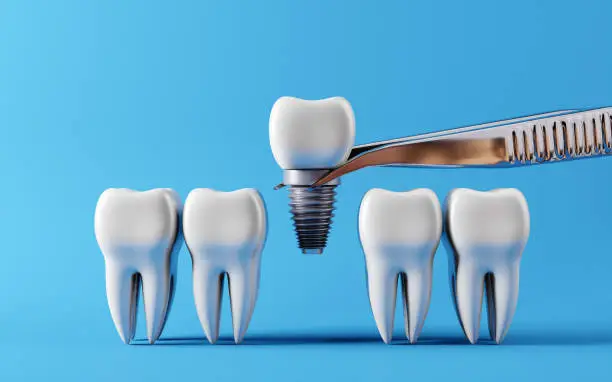
Dental implants are small posts, usually titanium, that act as artificial roots. They are placed in the jawbone where the missing tooth used to be. After the bone bonds with the implant over time, a custom crown, bridge, or denture is attached on top. The goal is to rebuild not just the look of your tooth, but the way it functions in your mouth.
If you are worried about safety, it may help to know that the U.S. Food and Drug Administration has clear guidance on what you should know about dental implants, including materials, process, and possible risks. Like any medical procedure, implants are not risk free, yet for healthy patients under the care of a trained dentist or specialist, they are a well established treatment with decades of clinical use.
So how does this translate into real benefits in your daily life. Here are five key ways that implant tooth replacement supports restorative dentistry and your quality of life.
1. Can dental implants feel like real teeth
One of the biggest worries people have is, “Will I always feel like I have something fake in my mouth” Implants are designed to feel stable when you chew and talk. Because the implant is anchored in bone, your new tooth does not rely on neighboring teeth or your gums for support.
Imagine biting into an apple without thinking about whether your tooth will move. Or speaking in a meeting without worrying that your denture might shift. That sense of “I can forget about my teeth and just live” is one of the most valued benefits people report with dental implant treatment.
2. How do dental implants protect your jawbone and facial shape
When you lose a tooth, the bone in that area begins to shrink because it no longer receives pressure from chewing through the root. Over years, this can lead to a thinner jaw and a more aged appearance around the mouth.
Implants help by taking on the role of the root. As you chew, the implant transfers gentle forces into the bone, which encourages the bone to stay active. This can slow or reduce the bone loss that often follows tooth removal. For people missing many teeth, this is a major reason dentists consider implants a strong tool in restorative dentistry.
3. What about comfort when eating and speaking
Traditional removable dentures rest on your gums. Even when they fit well, they can rub, pinch, or feel bulky. Many people find themselves avoiding certain foods because they are hard to bite or chew without pain or movement.
Implant supported teeth are fixed in place. That means less friction on your gums and a stronger bite. You may be able to enjoy a wider range of foods, including items that are crunchy or chewy, which supports better nutrition and makes social meals less stressful.
4. Do dental implants help protect your remaining teeth
With a traditional dental bridge, the teeth next to the gap are often reshaped so crowns can be placed on them to support the bridge. If those teeth are healthy, you might feel uneasy about removing protective enamel.
Implants stand on their own. They do not require grinding down neighboring teeth for support. This can preserve more of your natural tooth structure, which is a central goal in general, cosmetic, and restorative dentistry. Keeping more of your own tooth tissue usually supports better long term health.
5. Are dental implants really a long term solution
Cost is one of the main reasons people hesitate. Implants often require a higher upfront investment than a removable denture or a simple bridge. That concern is real, especially if you are managing other expenses or health needs.
At the same time, implants are built for long term use. With proper care and regular checkups, the implant itself can last many years. The crown or attachment on top may eventually need replacement due to normal wear, yet the foundation is designed for stability. When you spread the cost over that time, implants often compare more favorably to treatments that need frequent repair or replacement.
To understand the tradeoffs more clearly, it helps to see how implants stack up next to other common options.
How do dental implants compare to bridges and dentures
Choosing between implants, bridges, and dentures is not just about price. It touches function, comfort, appearance, and long term health. Here is a simple comparison to help you think through your options.
| Treatment Option | What It Replaces | Effect on Neighboring Teeth | Bone Support | Stability When Eating | Typical Longevity with Good Care |
|---|---|---|---|---|---|
| Dental Implant (single tooth) | Root and crown | No reshaping of nearby teeth | Helps maintain jawbone volume | High stability, feels fixed | Implant often decades, crown may need replacement |
| Fixed Dental Bridge | Crowns only | Requires grinding down support teeth | Does not prevent bone loss where tooth is missing | Good stability, fixed in place | Often 7 to 10 years before repair or replacement |
| Removable Partial or Full Denture | Visible teeth and some gum tissue | Clips or rests on existing teeth and gums | No direct support for bone, bone may shrink over time | Can move or shift, especially while chewing | Often 5 to 8 years, may need frequent adjustments |
If you want more scientific detail on how implants are placed and how they interact with bone and gums, academic resources like the Columbia University dental implant overview can be helpful. Still, your own health history, medications, and bone quality matter just as much as general statistics.
Three practical steps you can take right now
You do not have to decide everything today. A calm, step by step approach usually leads to better choices and less regret.
1. Clarify your priorities and limits
Before you sit in a dental chair, take a moment at home to write down what matters most to you. Is it comfort when chewing. Appearance. Avoiding future procedures. Budget. Time off work. Rank these in order and bring the list to your appointment. This helps your dentist tailor options in general, cosmetic, and restorative dentistry to what you truly value, not just what is technically possible.
2. Ask your dentist focused questions about implants
If you are a possible candidate for implants, ask direct questions such as “How many implants would I need and why” “What are the alternatives for my situation” “What are the short and long term risks in my case” and “What is the full cost, including any bone grafting or temporary teeth.” Clear answers can reduce anxiety and help you compare implants fairly with bridges or dentures.
3. Plan for long term care, not just the procedure
Implants require good daily care, just like natural teeth. Ask how to clean around them, what kind of toothbrush or floss is best, and how often you should return for checkups and X rays. Build these visits into your calendar and your budget. Viewing implants as part of your overall oral health plan, rather than a one time fix, leads to better results and fewer surprises.
Moving forward with more confidence
Feeling uncertain about missing teeth and possible treatments is completely normal. You are trying to balance comfort, appearance, cost, and long term health, often while managing everyday life at the same time. That is a lot to carry.
The good news is that you do not have to carry it alone. Dental implants offer a strong, natural feeling way to restore your smile, protect your jawbone, and support your remaining teeth, yet they are just one part of a broader set of options in restorative dentistry. When you take the time to ask questions, clarify your goals, and work with a trusted dental team, you put yourself in a better position to choose what truly fits you.
Your next step can be as simple as scheduling a consultation and saying, “I want to understand all my choices, including implants, in a clear and honest way.” From there, you and your dentist can build a plan that respects your health, your budget, and the way you want to live.