
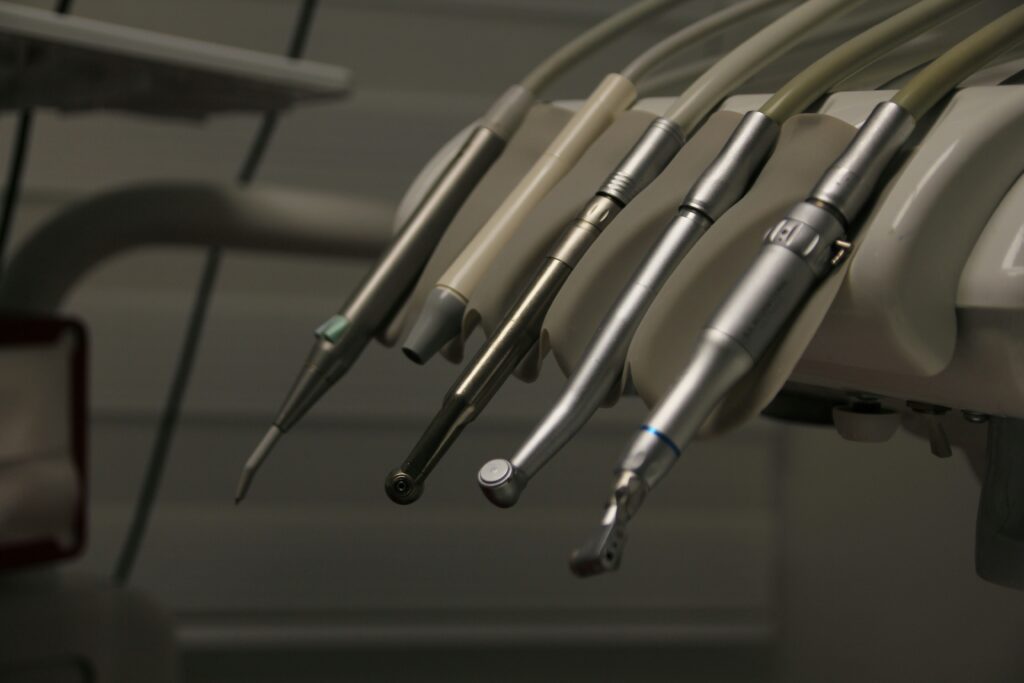
Your routine dental exam already protects your teeth and gums. Today, new tools give your dentist a sharper view of what is happening inside your mouth. These tools help find problems early, when treatment is simpler and less painful. They also reduce guesswork. You get clearer answers and a plan that fits your needs. During a visit, your dentist may use special cameras, lights, scans, and tests. Each one shows a different part of your mouth. Together, they build a full picture of your oral health. This matters if you see a general dentist or a cosmetic dentist in Green Bay. Early signs of decay, cracks, infection, or oral cancer are easy to miss with sight alone. These tools pick up what the eye cannot see. You gain time, control, and choice. You leave each exam with fewer doubts and more certainty.
1. Digital X‑rays
You may already know dental X‑rays from childhood visits. Digital X‑rays work in a similar way, yet they use sensors that send images straight to a screen. You see the results within seconds. Your dentist can enlarge the picture and point to spots of concern.
Digital X‑rays help your dentist see
- Cavities between teeth
- Bone loss from gum disease
- Infections at the root tip
The National Cancer Institute dental X‑ray fact sheet explains that modern systems use low radiation with careful safety steps. You still wear a lead apron. Your dentist also takes X‑rays only as often as needed, based on your risk and age.
2. Intraoral Cameras
An intraoral camera is a small wand with a camera at the tip. Your dentist moves it around your mouth. The camera sends live images to a screen in the room. You see what your dentist sees. That gives you clear proof of problems instead of confusion.
This tool helps you and your dentist
- Spot tiny chips and worn spots
- Check the edges of fillings and crowns
- Watch changes over time with saved images
You gain a stronger voice in your care. You can ask direct questions while you look at each tooth on the screen. That simple step builds trust and lowers fear.
3. Caries Detection Tools
Cavities start small. The surface may still look hard and smooth. Caries detection tools use light or gentle electrical signals to find early decay under the surface.
Your dentist may use
- Laser light that measures how tooth tissue reacts
- Fluorescent light that makes damaged spots glow
- Conductance devices that sense softer, weaker enamel
These tools support your dentist. They do not replace skill. Your dentist still checks your teeth by sight and with a simple explorer. The tool gives one more clue, so you avoid both missed decay and unneeded drilling.
4. Panoramic and 3D Cone Beam Imaging
Sometimes your dentist must see more than one tooth at a time. Panoramic X‑rays show your whole mouth on a single image. The picture includes both jaws, all teeth, and nearby joints and sinuses.
In some cases, your dentist may use cone beam computed tomography, also called CBCT. This tool creates a 3D view of your teeth and jaws. It helps when you need
- Implant planning
- Wisdom tooth removal
- Evaluation of jaw joint concerns
The U.S. Food and Drug Administration CBCT overview explains that this tool should be used only when the added detail changes care decisions. You can ask why it is needed and what your dentist expects to learn.
5. Periodontal Probing and Gum Health Tools
Healthy gums hold your teeth in place. Gum disease can move in quietly. Periodontal probing is a simple test that measures the space between your tooth and gum.
Your dentist or hygienist uses a thin probe with markings. They read the depth at several spots around each tooth. Higher numbers often mean deeper pockets and more risk of bone loss.
Some offices also use digital probes that record numbers on a computer. Others add small bacteria tests or saliva tests. Together, these tools help you
- Know your personal gum scores
- Track change from visit to visit
- Match treatment to the true level of disease
6. Oral Cancer Screening Tools
Oral cancer can appear on the tongue, cheeks, roof of the mouth, or throat. Early stages may not hurt. A careful screening during your exam can protect your life.
Your dentist first checks all soft tissues by sight and touch. Some offices then use special lights or dyes. These tools highlight spots that might need a closer look.
If your dentist sees a stubborn sore, lump, or color change, they may refer you for a biopsy. Early treatment of oral cancer often leads to better outcomes. That is why this step stays part of every complete exam.
How These Diagnostic Tools Work Together
No single tool tells the full story. Your dentist combines your medical history, your questions, a visual exam, and these six tools to create one clear picture. You gain more accurate answers, fewer surprises, and care that matches your real risks.
Common Diagnostic Tools Used During General Dental Exams
| Tool | Main Purpose | What You Experience
|
|---|---|---|
| Digital X‑rays | Find cavities and bone changes | Sensor in your mouth for a few seconds |
| Intraoral Camera | Show close‑up images of teeth and gums | Small camera moved around your mouth |
| Caries Detection Tools | Spot early hidden decay | Light or gentle touch on teeth |
| Panoramic or CBCT Imaging | View jaws, roots, and tooth positions | Stand or sit still while a machine circles your head |
| Periodontal Probing | Measure gum pocket depth | Light probing around each tooth |
| Oral Cancer Screening Tools | Check for abnormal mouth tissue | Visual exam, gentle feeling, and sometimes special light |
What You Can Do Before Your Next Exam
Before your next visit, write down questions about any tooth, gum, or jaw concerns. You can ask which diagnostic tools will be used and why. You can also ask how often you need X‑rays based on your history.
When you understand each tool, the exam feels less scary. You see the purpose behind every step. You and your dentist work as partners to protect your mouth and your overall health.